









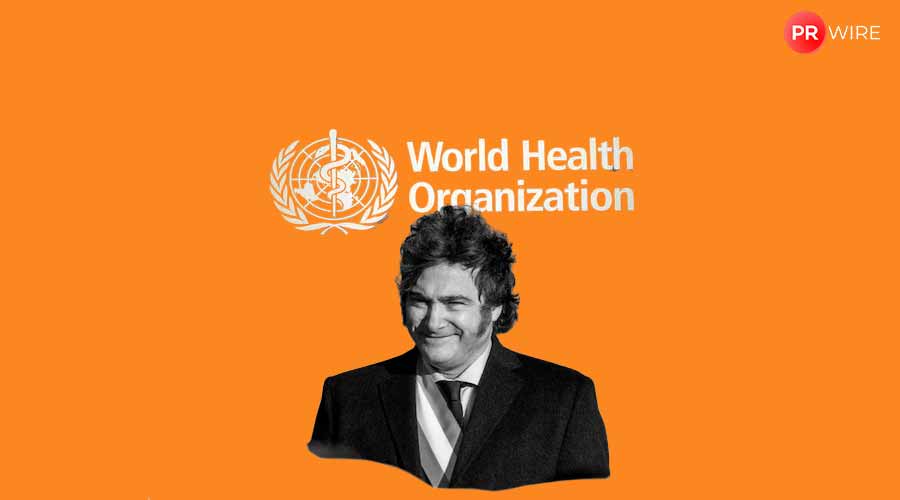
Argentina on Wednesday announced it will withdraw from the World Health Organization (WHO), following a similar move by the United States under President Donald Trump on his first day back in the White House in January.
“President (Javier) Milei instructed (foreign minister) Gerardo Werthein to withdraw Argentina’s participation in the World Health Organization,” presidential spokesperson Manuel Adorni said at a news conference, as quoted by CNN.
Argentina’s libertarian President, Milei, who considers Trump a close ally, ordered the country’s exit in response to what he described as “deep differences” regarding the WHO’s management of health issues, particularly its handling of the COVID-19 pandemic, news agency Reuters reported.
Adorni, referenced Argentina’s extended lockdown under the previous left-wing government as a key factor in the decision. He also highlighted concerns about the WHO’s perceived lack of independence from the political influence of other states.
This mirrors Trump criticism of the organisation over mishandling the COVID-19 crisis and other international health challenges, while demanding “unfairly onerous” payments from the United States, its largest financial contributor.
Trump leads, Milei follows
Milei, a self-proclaimed “anarcho-capitalist” and vocal Trump supporter, declared the WHO a harmful organisation and accused it of executing “the largest social-control experiment in history.” His spokesperson, Manuel Adorni, insisted that leaving the WHO would not lead to a loss of funding for Argentina. However, healthcare organisations such as NGO Soberanía Sanitaria warned that the exit could impact the country’s access to essential medical supplies and technologies.
Despite Milei’s announcement, critics argue that his decision is not legally binding without congressional approval. “In Argentina, the relationship with the WHO is part of a law, and therefore, in order to withdraw, another law should be approved,” said Juan Gabriel Tokatlian, professor of international relations at Universidad Torcuato Di Tella in a conversation with The Guardian.
Milei’s withdrawal from the WHO is widely seen as an attempt to further align Argentina with Trump’s policies. Since taking office, Milei has also announced plans to exit the Paris Agreement and construct a border fence with Bolivia.
Observers warn that blindly following Trump’s approach may not serve Argentina’s interests. “Argentina has so many vulnerabilities. Does this government think it will solve them by getting closer to Washington?” Tokatlian questioned. He cautioned that Trump’s foreign policy has often been unpredictable, pointing out that, during his first term, Trump imposed tariffs on Argentine steel and aluminium despite the countries’ diplomatic ties.
Milei’s administration has also pushed aggressive austerity measures in state healthcare, including the layoff of 1,400 health ministry employees, with significant cuts to vaccine and disease prevention programmes. Many in Argentina’s medical community fear that the WHO exit, combined with these drastic budget reductions, will severely impact public healthcare services.
What is in for WHO?