














CJI Gavai’s latest administrative intervention came close on the heels of another such move last week in a matter decided by justices Pardiwala and Mahadevan.
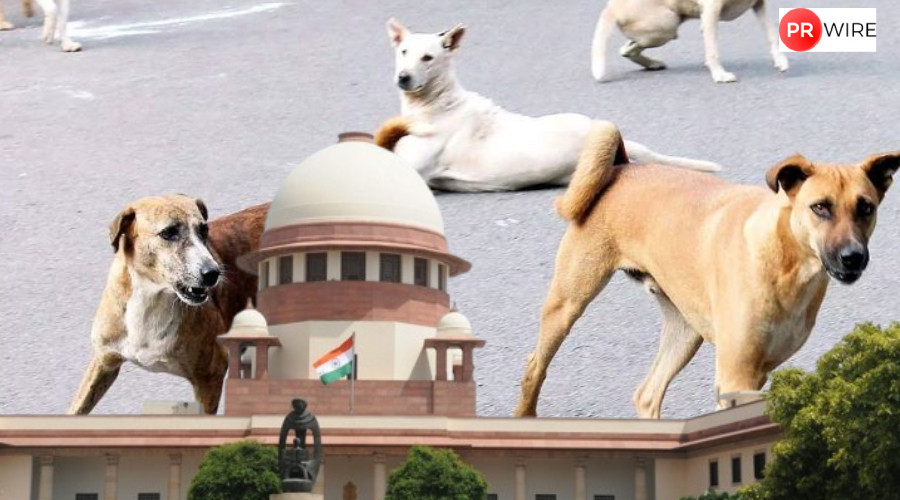
Chief Justice of India (CJI) Bhushan R Gavai on Wednesday withdrew the suo motu case on stray dogs from the bench of justices JB Pardiwala and R Mahadevan, which had two days ago directed civic authorities in Delhi-NCR to capture and keep such canines in shelters, and reassigned it to a fresh three-judge bench.
The new bench, led by Justice Vikram Nath, will take up the matter on Thursday.
Follow LIVE updates on stray dogs case’s hearing in Supreme Court.
The administrative intervention and the reassignment of the matter marked an extraordinary step by the CJI that came amid mounting concerns from animal rights groups and other stakeholders over the directions of the Justice Pardiwala bench.
The development came on the same day the bench released its detailed written order that expanded the oral directions delivered on August 11 and spelled out welfare, staffing, record-keeping and adoption safeguards that must govern the capture and sheltering of stray animals across Delhi-NCR.
The reassignment of the case came after advocate Nanita Sharma, appearing for NGO Conference for Human Rights (India), told the CJI on Wednesday morning that the Pardiwala bench directions appeared to be in conflict with a 2024 judgment by the Supreme Court, which had barred indiscriminate killing of community dogs and required compliance with the Prevention of Cruelty to Animals Act, 1960, and the Animal Birth Control (ABC Rules).
Sharma referenced the Supreme Court’s May 9, 2024 order, in which a two-judge bench closed a long-pending batch of petitions on stray dog management and the interplay between the 1960 Act, ABC Rules, and state municipal laws. This order asserted that “there cannot be any indiscriminate killings of canines” and that authorities must act in the “mandate and spirit” of prevailing legislation.
CJI Gavai responded: “But the other bench has already passed orders,” before assuring, “I will look into this.”
Hours later, the suo motu matter was listed before a new bench of three judges, also comprising justices Sandeep Mehta and NV Anjaria. A fresh petition related to the stray dog issue, filed only on Wednesday morning, will also be heard along with the suo motu matter.
The administrative reassignment, ordered by CJI Gavai as the master of the roster vested with powers to assign and re-assign cases to different benches in the Supreme Court, would allow the new bench to examine the original order. Being a larger bench, it can also stay the August 11 order or refer the issue to an even larger bench.
CJI Gavai’s latest administrative intervention came close on the heels of another such move last week in a matter decided by justices Pardiwala and Mahadevan. On Friday, the Justice Pardiwala bench reversed its unprecedented August 4 order restraining an Allahabad High Court judge from hearing criminal cases for the remainder of his tenure. The rollback followed a letter from the CJI urging reconsideration, amid concerns that the directive had strayed into the administrative domain of the high court.
Notably, only a day earlier, while hearing an unrelated matter, CJI Gavai emphasised that the country’s top judge holds no superior judicial authority over the other 33 judges of the Supreme Court. “The CJI is not superior to other judges. He exercises the same judicial power like the other 33 judges of this court. The CJI is just the first among equals,” Justice Gavai said. This bench was hearing the Union government’s plea to recall an April 26, 2023 judgment in Ritu Chhabaria Vs Union of India, which held that an accused is entitled to default bail if the investigating agency files an incomplete charge sheet.
On August 11, justices Pardiwala and Mahadevan had directed civic bodies in Delhi, Noida, Ghaziabad and Gurugram (Faridabad added in the written order) to round up all stray dogs within eight weeks and keep them in dedicated shelters, making it clear that no captured animal should be released back on the streets.
This order, however, triggered strong reactions from animal rights groups, who argued that such sweeping measures risk causing unnecessary harm and suffering to the animals. Activists contended that the directive overlooked established animal welfare protocols, such as vaccination, sterilisation and community feeding, which they said are more effective and humane ways to manage stray populations. Several organisations further urged the CJI, court and government agencies to reconsider the approach.
The order released on Wednesday evening, now on the record though the Pardiwala bench will no longer hear the controversy, also made welfare protections central to the set of directives for removing stray dogs from public spaces.
The order stressed that “at no stage should these dogs be subjected to any mistreatment, cruelty or deplorable standards of care,” and added operational standards that were not set out in the oral order on August 11. Authorities have been told to ensure that: there is no overcrowding at shelters and pounds; animals are not starved; vulnerable or weak dogs be housed separately, and “timely medical care should be provided by trained veterinarians.”
On the issue of adoptions, the bench authorised authorities to consider adoption schemes but subject to strict conditions and in accordance with the Animal Welfare Board of India’s Standard Protocol for Adoption of Community Animals. The court made it plain that any adoption that resulted in an animal being let back into public spaces would be impermissible. “No such adoption, if any, should result in the re-release of a stray dog back on to the streets. If we find even a single infraction of such kind, we will proceed to take the strictest of action,” the court had said.
The case had arisen from media reports and public concern after a six-year-old girl in Delhi died of rabies following a dog bite. The court had taken suo motu cognisance on July 28. The bench repeatedly cited disturbing patterns of dog-bite incidents and the inability of local agencies to keep public spaces safe.
The article originally appeared on Hindustan Times