















The Delhi High Court overturned a ruling requiring A R Rahman to deposit ₹2 crore in a copyright case, stating the Junior Dagar brothers were performers, not authors.
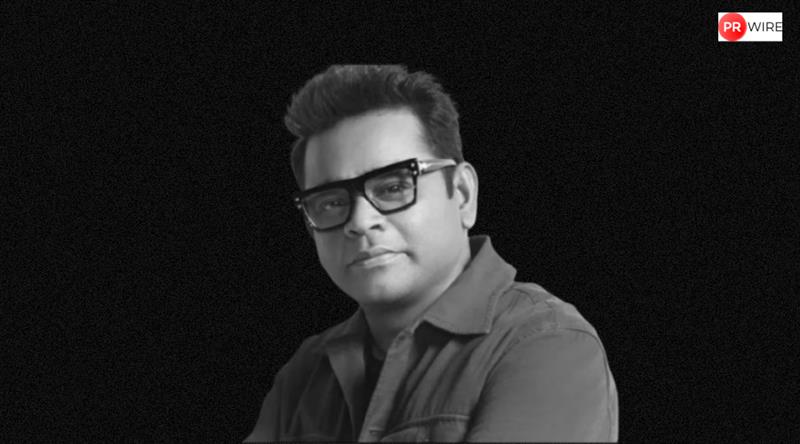
The Delhi high court on Wednesday set aside an order directing music director A R Rahman and the makers of film ‘Ponniyin Selvan 2’ to deposit ₹2 crore in a copyright lawsuit filed by Ustad Faiyaz Wasifuddin Dagar alleging that “Veera Raja Veera” song of the film infringed “Shiva Stuti” composed and authored by renowned Dagarvani musicians, the late Ustad Nasir Zahiruddin Dagar and Ustad Nasir Faiyazuddin Dagar.
A bench of justices C Hari Shankar and Om Prakash Shukla delivered a separate but concurrent ruling in an appeal filed by Rahman challenging the single judge’s April 25 order. They held that junior Dagar brothers were only performers and not composers or purported authors of the “Shiva Stuti”.
Justices Shankar said in his order that the high court single judge “erred” on principle in treating evidence of the Junior Dagar Brothers having rendered, and performed, the Shiva Stuti suit composition as prima facie evidence of their having composed it.
“…the impugned order suffers from a fundamental error of principle in holding that the respondent can, even prima facie, be regarded as the holder of copyright in the Shiva Stuti suit composition. That the impugned order errs on principle in treating evidence of the Junior Dagar Brothers having rendered, and performed, the Shiva Stuti suit composition as prima facie evidence of their having composed it. Such an interpretation would, in our view, require us to rewrite Section 2(d)(ii) and Section 2(ffa) to include a performer of a musical work as its author,” Justice Shankar said.
The April 25 ruling by justice Prathiba M Singh was delivered in a copyright infringement suit filed by Ustad Faiyaz Wasifuddin Dagar, a renowned classical singer, who said that the song was identical to the work “Shiva Stuti” – a traditional Dhrupad composition by his father and uncle- late Ustad Nasir Zahiruddin Dagar and Ustad Nasir Faiyazuddin Dagar (popularly known as junior Dagar brothers).
Justice Singh, relying on the cover photographs of the CD of the album “Shiva Mahadeva” from the Royal Tropical Institute and a copy of the inlay card, with no evidence to the contrary, held that the Junior Dagar Brothers were the authors of the Shiva Stuti.
The court held that it was their original work, as it had been both composed and performed by them. Concluding that Rahman’s composition infringed Dagar’s right in Shiva Stuti, the judge had directed Rahman, Madras Talkies and co-producers– Lyca Production Private Limited to deposit ₹2 crore with the High Court’s Registry and pay ₹2 lakh as costs to Ustad Faiyaz Wasifuddin Dagar, within four weeks.
Rahman had approached the division bench against this ruling, asserting that the single judge had erroneously concluded that the song was authored by Junior Dagar Brothers, despite an absence of any evidence in that regard. He further asserted that all the evidence filed by Ustad Faiyaz Wasifuddin Dagar related to mere stage performances and not to composing/authoring the musical work.
Ustad Faiyaz Wasifuddin Dagar, represented by advocates Neel Mason and Arjun Harkauli, asserted that the junior Dagar brothers were the original authors and composers of the Shiva Stuti since they had sung and performed the same at the Royal Tropical Institute, Amsterdam and recorded the same in a CD. This evidence, Mason asserted, was enough to meet the prima facie threshold for establishing exclusive authorship.
Setting aside the order, Justice Om Prakash Shukla in his 75-page verdict ruled that the junior Dagar brothers were only performers and not composers or purported authors of the Shiva Stuti, since the song has been a part of the common Dagarvani tradition, which has been preserved and passed down through generations within the Dagar family and their disciples.
Attributing exclusive authorship to Junior Dagar Brothers, the court said, would be contrary to the “objective of copyright law”, would adversely affect how young musicians learn the Indian Classical Music and share compositions while training.
“The records clearly indicate the Junior Dagar Brothers only as performers, not as composers or purported authors. Additionally, “Shiva Stuti” is admittedly a traditional composition, based on elements of Raag Adana, which is itself in the public domain. It would therefore be untenable to suggest that the Junior Dagar Brothers could be deemed the purported authors of the work. Treating performance as a presumption of authorship would run contrary to the legislative intent, which deliberately refrains from equating mere fixation or performance with authorship in the case of musical works,” the court maintained.
Justice Shukla opined that the reasoning arrived at by the single judge to conclude that the junior Dagar brothers were Shiva Stuti’s authors was untenable, concluding that the mere presence of CDs of performance and their inlay cards does not establish authorship but only establishes an individual’s right as performer. “The reasoning arrived at by the learned Single Judge by presumption of the authorship being in default of no material to the contrary having been produced before the learned Single Judge, in our view, is not tenable as mere presence of CDs of performance and their inlay cards do not establish authorship. The learned Single Judge in the first instance has erred in presuming the Junior Dagar Brothers to be the composer, despite the absence of any evidence or attribution naming them as authors or purported authors of the musical work,” the court maintained.
The article originally appeared on Hindustan Times