
















After ChatGPT dominated the early chatbot market, Google staged a comeback with a powerful AI model.
In the wee hours of an August morning, an artificial-intelligence project manager at Google loaded the newest creation from its DeepMind lab onto a platform that ranks AI models.
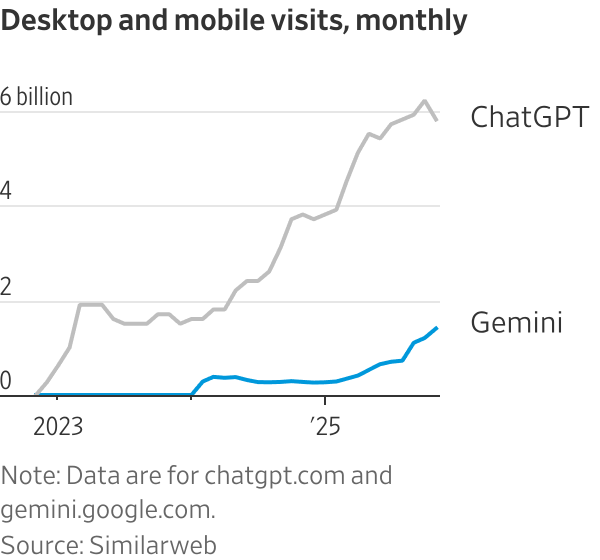
Google had fallen behind in the AI race, while its rival OpenAI had attracted hundreds of millions of users to its ChatGPT chatbot. Google researchers were hoping that a new feature—a lightning-fast image generator—would give the search titan an edge in a weak spot for ChatGPT.
Two months later, Google launched its most powerful Gemini model yet, which surged past competitors to become the
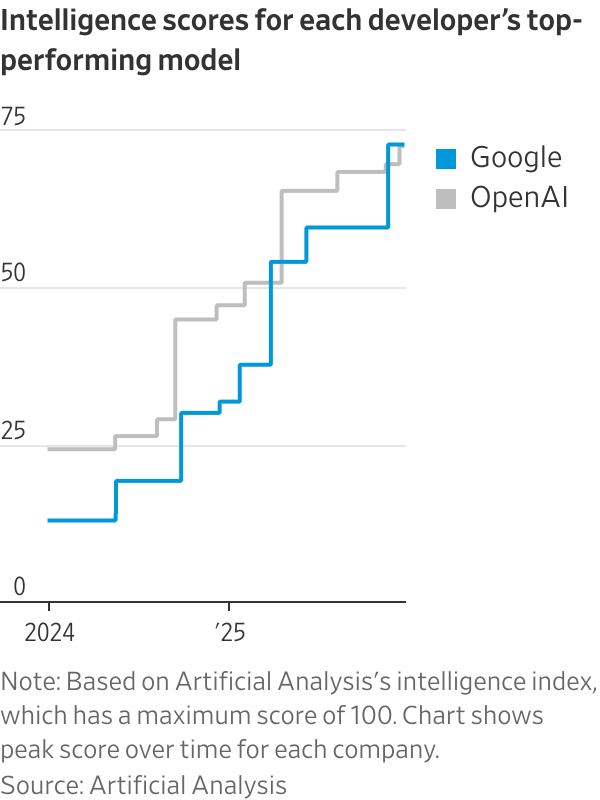
Chart.

Google started designing its own AI chips. One of the company’s tensor-processing units in 2021.
ChatGPT challenge

When OpenAI introduced ChatGPT, a million people signed up within days to test it. The chatbot was promoted at a trade show in Tokyo in 2023.
Project Magi

Liz Reid, now Google’s vice president of search, led a multiteam effort to figure out what AI-driven search should look like.

Google co-founder Sergey Brin, right, spoke with Demis Hassabis, head of the company’s DeepMind division, at the annual developer conference in May.
‘I want to use this’

Conference attendees trying out activities that highlight Google’s Gemini AI.
The article originally appeared on Hindustan Times