















With a 7,000mAh battery, 144Hz AMOLED display, 200MP camera, and AI features, can the Realme 16 Pro Plus truly impress? Let’s find out in this review.
Every few months, a new Realme smartphone lands in India, promising the sweet spot between performance and price. The Realme 16 Pro Plus, however, feels like a different story; it doesn’t scream innovation but quietly pushes the series toward flagship territory. Yet, this is the first in the number series to get a taste of flagship-level upgrades, from Samsung’s 200MP ISOCELL HP5 sensor to a refreshed design crafted with Naoto Fukasawa.
However, on paper, much of the Realme 16 Pro Plus mirrors its predecessor, the Realme 15 Pro, apart from the beefed-up camera setup that now includes a telephoto lens.
The Realme 16 Pro Plus 5G starts at Rs. 39,999 for 8GB RAM and 128GB storage variant and ranges up to Rs. 44,999 for 12GB RAM and 256GB storage model, while the realme 16 Pro 5G starts at Rs. 31,999 for 8GB RAM and 128GB storage model and goes up to Rs. 36,999 for the 12GB RAM and 256GB storage in India. But does this refinement make it a genuine upgrade, or is it just a camera-focused facelift?
I’ve been using the Realme 16 Pro Plus (12GB RAM and 256GB storage) as my secondary device for a month now, testing it in everyday scenarios, from multitasking to photography. Here’s my take on whether the Realme 16 Pro Plus lives up to the hype or if it’s simply playing it safe.
View this post on Instagram
Realme 16 Pro Plus review: Design and Display
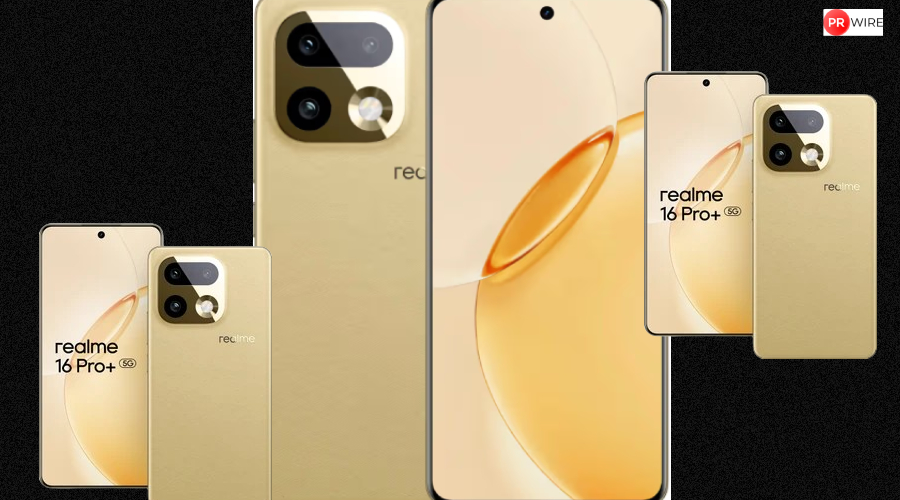
Pick up the Realme 16 Pro Plus, and the first thing you notice is that it does not try to look familiar. Realme has been reshaping the design of its number series, and this phone continues that approach. While the intent to stand out is clear, the execution feels uneven. The rear camera layout, in particular, lacks clarity. It borrows the same camera design layout as seen on recently launched OnePlus and Oppo phones, also ends up looking like a slightly revised version of the Realme GT 8 Pro’s camera design rather than something entirely its own.
The Realme 16 Pro Plus comes in Master Gold, Master Grey, and India-exclusive Camellia Pink colour options. I got the Master Gold review unit, which measures 8.49mm in thickness and weighs 203 grams. Although the weight is noticeable during extended use, it remains manageable and does not affect everyday handling.
The back panel is one area where Realme gets things right. This time, Realme has used a bio-based silicone surface with a finish that is similar to worn leather. The texture improves grip and makes the device easier to hold without a case. It also pairs well with the glossy gold metal frame around the edges. Fingerprints are not an issue, but the surface attracts dust and marks, particularly on the gold model. This may push users towards using a case for everyday use.
Also read: Realme P4 Pro 5G review: Crisp display, AI smarts and all-day stamina under ₹25000
Let’s come to the display, which plays a central role in the Realme 16 Pro Plus. It features a 6.8-inch curved AMOLED panel with a 1.5K resolution of 1280 x 2800 pixels. The screen supports refresh rates up to 144Hz, though during daily use it mostly runs at 120Hz. Touch sampling reaches 240Hz, and pixel density stands at 453 PPI.
Brightness is handled well. Outdoor visibility remains clear thanks to a high brightness mode that reaches up to 1,800 nits. HDR content can push higher levels, with a claimed peak of 6,500 nits. During personal use, I watched several movies and shows on Netflix and YouTube, and the panel handled contrast and highlights without issues. The lowest brightness setting also helps when watching content in dark rooms.
Colour coverage spans the full DCI-P3 range, with multiple display modes available. HDR10 support works across major streaming platforms. However, when watching videos in brightly lit spaces such as railway stations or airports, the curved edges reflect light and can distract from the viewing experience. This remains a common drawback of curved displays.
Furthermore, the display features a small punch-hole that houses a 50MP front camera. The earpiece located above the screen also serves as a second speaker. An optical fingerprint sensor sits under the display, and Corning Gorilla Glass 7i protects the panel.
Buttons sit on the right side, with the power key and volume controls placed within easy reach. The bottom houses the SIM tray, USB-C port, microphone, and main speaker. There is a secondary microphone and speaker vent on the top, and an IR blaster built into the camera area on the back.
Also read: OnePlus Nord 5 review: Best 5G mobile under ₹35,000?
Realme 16 Pro Plus review: Performance and software
The Realme 16 Pro Plus is powered by Qualcomm’s Snapdragon 7 Gen 4, the same chip we saw on the Realme 15 Pro. On paper, it is a capable processor and, in daily use, it mostly lives up to that promise. The device feels quick when opening apps, switching between tasks, or scrolling through social feeds. I never felt it slow down during routine use, which is what most buyers will care about.
Where things get complicated is the competition. Outside Realme’s lineup, MediaTek-powered phones such as those with the Dimensity 8350, and even Qualcomm’s own higher-tier chips, clearly offer more value. The bigger problem, though, comes from Realme itself. The Realme GT 7, launched earlier and often priced lower, packs a far stronger Dimensity 9400e chip. For anyone who values raw speed, that makes the 16 Pro Plus a tougher choice at its current price.
Gaming performance is steady rather than class-leading. The device handles popular and demanding titles like BGMI without trouble, including HDR Ultra support, and it can push high frame rates in supported games. During my sessions, I did not notice heating issues or sudden frame drops, thanks to the built-in cooling system. Genshin Impact runs best at lower settings, staying smooth at 30fps, while medium settings are playable with minor stutters during heavy action.
Also read: Sony ULT Tower 9AC review: Loud, flashy, and impossible to ignore – worth it?
On benchmarks, the Realme 16 Pro Plus 5G performs well with an AnTuTu score of 13,91,552 and GeekBench 6 single-core and multi-core scores of 1,317 and 3,922, respectively. During the Wild Life Extreme Stress Test on 3DMark, the device achieved a best loop score of 2,108 with 97.7% stability. Scores are strong enough for a premium mid-range phone, but they also highlight the gap between this device and more powerful options available at similar prices. At Rs. 39,999, the performance feels slightly out of balance, especially when better-performing options exist within the same brand.
On the software side, the Realme 16 Pro Plus ships with Android 16 and Realme UI 7.0. The interface feels clean, smooth, and familiar, with sensible animations and stable behaviour. Realme promises three Android version updates and four years of security patches, which is reassuring for long-term users.
There is a heavy focus on AI features, from photo tools like object removal and glare correction to gaming and translation aids. Some of these are genuinely useful; others feel more like extras you may try once or twice. Overall, the software experience is polished, but the phone’s performance-to-price balance remains its biggest question mark.
Realme 16 Pro Plus review: Camera
The Realme 16 Pro Plus approaches photography with clear intent, and on paper, the setup looks ambitious. You get a 200MP Samsung HP5 main camera with optical stabilisation, a 50MP 3.5x telephoto lens meant mainly for portraits, and an 8MP ultra-wide camera. You also get a 50MP camera on the front for selfies and vlogging. Compared to the standard Realme 16 Pro, the addition of the telephoto lens and improved portrait processing makes a real difference in daily use.
In good lighting conditions, the main camera can deliver pleasing results, though it is not always predictable. Some images look slightly bright or washed out, while others come out sharp and well-balanced. When conditions are right, especially in the full 200MP mode, the camera captures fine textures that you can notice when zooming in. One thing I noticed is that the device takes a moment to process images, which can feel slow if you’re clicking several photos back to back.
Colours usually stay close to reality, and highlights are mostly kept in check during the day. There is no dedicated macro mode, but using a 2x crop from the main camera works reasonably well for close-up shots. The high-resolution mode is useful if you enjoy editing or cropping later.
Portrait photography is where the phone feels most confident. Edge detection is clean, skin tones look natural, and the 3.5x telephoto lens gives portraits a different perspective that you do not get on most phones in this price range. You can also switch to 4x zoom. Digital zoom goes up to 120x, but results beyond 30x are best avoided.
Also read: I spent days gaming on the ASUS ROG Xbox Ally X: Check if it is worth ₹114990
Furthermore, the ultra-wide camera does its job in daylight, though the low resolution limits detail. Low-light photography is handled better than expected. Night mode keeps noise under control and avoids harsh highlights. Skin tones stay natural even under mixed lighting, which is something many phones still struggle with.
On the other hand, the 50MP front camera delivers sharp selfies with good exposure, and portrait selfies look convincing. For video, the device can support up to 4K at 60fps and can record from both front and rear cameras. Stabilisation helps keep handheld videos steady, and overall video quality is reliable for casual shooting and social media use.
In short, the Realme 16 Pro Plus may not be perfect, but its camera setup feels versatile, especially for portraits and everyday photography.
Realme 16 Pro Plus review: Battery Life and Charging
Battery life is where the Realme 16 Pro Plus quietly wins you over. It comes with a 7,000mAh battery, and in daily use, that number actually means something. During my travel in Nepal, with heavy use and long hours on Wi-Fi, the phone lasted close to two days. Screen time usually lands between seven and nine hours, which is reassuring when you are away from a charger.
Realme also adds useful charging controls. You can pause charging at 80 percent to help the battery last longer over time, and there is a smart charging mode that learns your habits. The 80W charger in the box does its job well, taking the phone to 50 percent in under 30 minutes and a full charge in less than an hour. Gamers will also appreciate bypass charging, which reduces strain on the battery. In short, battery performance is one of this phone’s strongest points.
Also read: I think these are the 6 best camera phones in India right now (2026)
Final Verdict
The Realme 16 Pro Plus plays it safe, and that is both its strength and its weakness. It stands out for its capable 200MP camera with a useful telephoto lens, a bright AMOLED display, and excellent battery life that comfortably lasts a full day and more. However, the Snapdragon 7 Gen 4 feels underwhelming at this price, especially when faster alternatives exist within Realme’s own lineup. The design feels premium, but the weight and curved display will not appeal to everyone, and it’s outdated.
At Rs. 39,999, it may suit users who value photography, display quality, and better battery life; otherwise, if you are in search of better camera quality and advanced performance, there are so many alternatives available in the market in the same segment or at higher prices.
The article originally appeared on Hindustan Times